
Introduction
Welcome to the Wasteland
War. War Never Changes
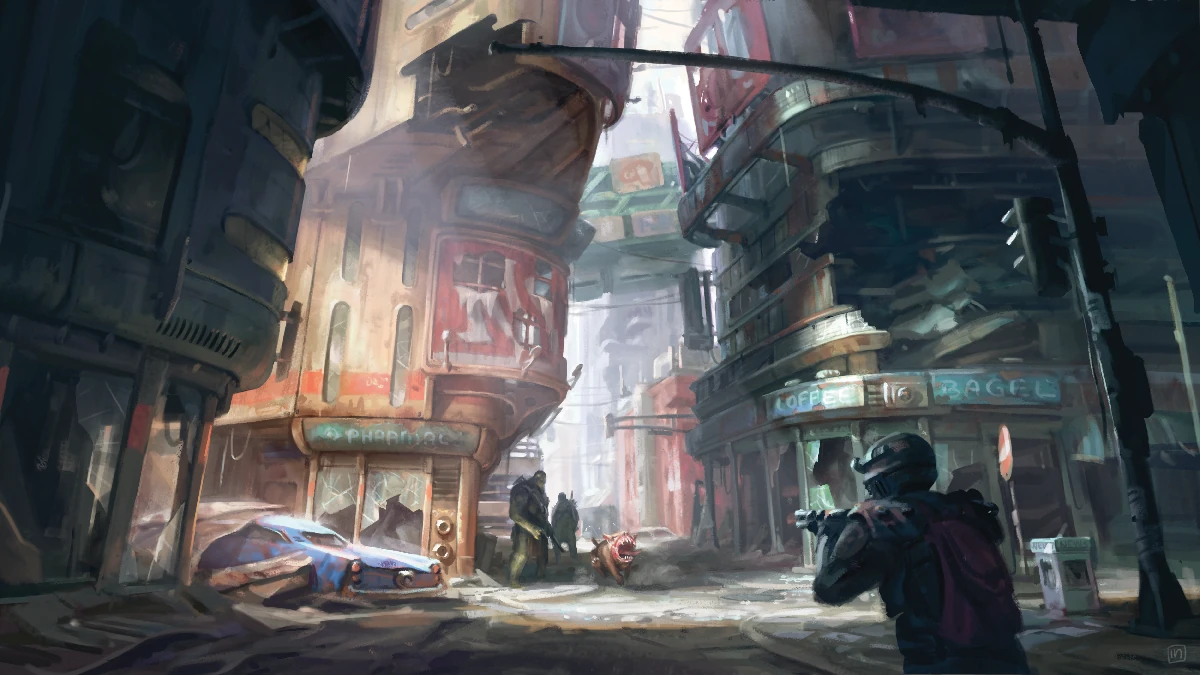
The United States of America is no more. It was destroyed when the world’s nuclear warheads were launched. The ensuing apocalypse brought an end to both the Great War and the civilized world. In its place exists the Wasteland, an irradiated landscape pockmarked by ruined cities, decaying civilizations, and pockets of desperate survivors. It is inhabited by a variety of mutated creatures, horrific beasts, and undying ghouls. The radiation from the detonations spread quickly. Everything that wasn’t killed immediately was irradiated, and most of the country’s diverse plant and animal life was wiped out.
Survivors work to reclaim what little they can and salvage what they cannot rebuild. Civilization is starting to take root again and certain areas of the country have reached a level of stability that might even be called comfortable, at least for the rich and powerful.
Disparate factions have begun to split off as these communities have grown. Each faction looks to make its own way, and some are far more dangerous than others. By far, the most dangerous are the Raiders. They place no value on any human life but their own. Yet civilization has begun to flourish, despite the opposition.
Trade, economy, and even government have begun in some areas of the wasteland. Each community adapts or adjusts its own governmental system according to its needs. Merchants travel protected routes, trading at cities across the wasteland. The merchants have created a new currency in the form of bottle caps (‘Caps’).
Life in the wasteland is harsh. The sun beats down hard and the radiation is intense. Clean water and food are rarities. Most survivors have been forced to adapt to dirty water and irradiated food. Surviving alone is difficult at best, but living in a community comes with its own struggles.
What Is In the Quickstart?
This quickstart contains a how to play section, pre-generated characters, and Machine Frequency, a starter adventure. It includes all the information needed to start playing in the wasteland!
What You Need To Use This Book
You’ll need a few things to begin your journey across the wasteland. Once you’ve assembled everything listed here, you can begin!
Players and A Gamemaster
You will need a few players (we recommend 3 to 5) and one gamemaster. Each player picks a character, and together they form a group that travels together across the nuclear wastes. The gamemaster takes on the role of running the game. They play all the other characters, set the challenges the players face, shape the plot of the campaign and adjudicate the rules.
Character Sheets
Each player needs to choose one pre-generated character from those included in the quick start. We recommend filling them in using pencil, as information about your character may change as the game progresses. The GM will need to read through the quick start and the adventure first so they know what the players will be coming up against.
Dice
Fallout: The Roleplaying Game uses two types of dice, which can be easily found online or in gaming stores. The first is a twenty-sided die (called a d20) and and the second is a regular six-sided die (called a d6).
Ideally, you want at least two d20s per person. If your dice supplies are limited, the group can make do with sharing a set of d20s. You’ll never need to roll more than five d20s at once.
You will also need at least four d6s. When these dice are used in the game, they are called Combat Dice and are abbreviated to dC6 throughout this book. We recommend using the custom d6s created for Fallout: The Roleplaying Game which can be bought from modiphius.net. The symbols featured on the die faces have various meanings, which are explained later and make for easier reading of results. If you don’t have the custom dice, you can use normal d6s with numerical faces and reference the table in Chapter Two: Combat.
Tokens, Chips, Or Caps
You will also need some counters to keep track of Action Points. You can use poker chips, beads, or other tokens to represent these. You can even use caps available from modiphius.net to represent Action Points if you want to go all-in on the Fallout theme!
If you don’t have any tokens to hand, you can track Action Points on a piece of paper. While this makes it a little harder to visualise, providing you have one player at the table keeping track of the players’ Action Points and the gamemaster keeps track of their own, this method also works just as well.
PAPER AND PENCILS
Lastly, you’re going to want to have some spare paper and some pencils. Not only will you want to fill in your character sheet, but you’ll want to record notes during your game sessions.
You may discover information from the gamemaster about a character or place, or want to note down things about your quests as they happen. Some players use spare paper and keep this with their character sheets. Other players may find using digital note-taking easier, or use a journal or notebook specifically for their game.


