
Part 6: Items
Using Items
Introduction
Adventuring through the storm- and war-torn world of Roshar can be a perilous endeavor, and you'll need gear to survive and thrive. In addition to spheres -- Roshar's currency -- you'll use weapons, armor, and equipment to meet your basic needs while journeying throughout the continent.
Using Items
Most rules for using items are presented in their specific sections, but here are a few general rules that apply to multiple kinds of items.
Expert Traits
Unless otherwise specified, you can use the items in part 6 without any special expertise. However, some weapons and armor have expert traits, giving benefits that only apply if you have an expertise in that weapon or armor.
Items with Statistics
The names of items are usually listed without special formatting. However, when it might be helpful to know that a mentioned item has specific rules or statistics, the item name appears in bold italics. For example, "the characters find a lockpick " lets you know you should check the rules to find out how a lockpick works.
Spheres
Most nations on Roshar use spheres as their primary currency. Each sphere is a gemstone encased in a glass bead, slightly flattened on one side to keep it from rolling away. The glass beads are always the same size, but the size and type of gemstone inside determines the sphere's value. From smallest to largest, the three sizes of gem are:
Chip. Chips only contain a small sliver of a gem; these are worth one-fifth of a mark.
Mark. Marks contain a half-carat gem and are worth 5 chips (or one-fourth of a broam).
Broam. Broams contain a sizable two-carat gem and are worth 4 marks (or 20 chips).
For simplicity, this game tracks money using only one denomination, "marks" (sometimes abbreviated "mk")-this always refers to a diamond mark.
However, on Roshar, spheres aren't only counted in chips, marks, and broams, but each is worth a different amount depending on which type of gem it is. Spheres can be made of diamond, garnet, heliodor, topaz, ruby, smokestone, zircon, amethyst, sapphire or emerald. You can find these conversions on the Sphere Values in Diamond Marks table; if you ever receive spheres in other denominations, the GM will simply tell you their value in diamond marks.
Sphere Values in Diamond Marks
| Gemstone | Chip | Mark | Broam | |
|---|---|---|---|---|
| Diamond | 0.2 | 1 | 4 | |
| Garnet, heliodor, topaz | 1 | 5 | 20 | |
| Ruby, smokestone, zircon | 2 | 10 | 40 | |
| Amethyst, sapphire | 5 | 25 | 100 | |
| Emerald | 10 | 50 | 200 | |
Weapons
This section outlines the weapons available in these starter rules; for more weapons, see chapter 7 of the Stormlight Handbook.
The Weapons table includes the following columns:
Type. The general type of weapon-but feel free to creatively describe your own, as long as it uses the same statistics.
Skill. The skill you test when attacking with this weapon.
Damage. How much damage the weapon deals when it hits or grazes.
Range. How far away the weapon can attack (see the upcoming "Weapon Range" section).
Traits. Special rules that apply to that weapon (see the upcoming "Weapon Traits" section).
Expert Traits. Special rules that apply only if you have an expertise in that weapon. Some weapons remove an undesirable trait if you have expertise, rather than adding a desirable trait.
Weight. The weapon's weight.
Price. The weapon's standard price.
See the "Attacking" section of part 3 for the full rules about attacking using these weapons.
Wielding Weapons
Each weapon requires one hand to wield unless otherwise specified in its traits. While wielding a weapon, you can use it to attack or use other abilities. Rules that apply to "your weapon" only apply if you're wielding that weapon.
If you aren't wielding a weapon (or holding an object) in a hand, you have that hand free for other abilities that require it. If both of your hands are full but an ability doesn't state you need a hand free, it's up to the GM to decide whether you could reasonably use that ability in the narrative.
Drawing Weapons
You can use the Interact action to draw a weapon in your possession and grasp it in your hand. After you do, you're wielding that weapon and can use it for attacks and other effects.
You can use the Drop free action to release a weapon you're holding (for example, right before you Interact to draw a different weapon). When a scene begins and you're not Surprised, it's assumed you can instinctively draw your weapons before the first round (without using the Interact action).
Offhand Weapons
While wielding more than one weapon, you must choose which one is in your main hand. Attacks with that weapon are made as usual.
When you wield a weapon that's not in your main hand, it's in your offhand. Before you use the Strike action using a weapon in your offhand, you must spend 2 focus. (Attacks other than the Strike action don't require spending that focus.)
Some characters might wield their weapons using methods other than hands. You can do this if you're only wielding weapons that another character could with two hands. When you do, pick which weapon is considered your "main hand" and "offhand" (regardless of how you hold them), and otherwise follow the weapon rules. Unless your GM decides otherwise, you can't wield more than two weapons (or one Two-Handed weapon) at a time, regardless of whether you use your hands to do so.
Ammunition
If your weapon has the Loaded or Ranged trait, you don't need to purchase its ammunition or track it on your character sheet (unless the weapon uses special ammunition). However, the Loaded trait does limit how many shots you can make with a weapon before reloading. It's assumed you can always obtain or improvise standard ammunition for your weapons, unless the GM decides you're in an unusual situation where ammunition is unavailable.
Weapon Range
Weapons can only attack targets within a certain range. Each weapon is classified as either a melee weapon or a ranged weapon (see "Targeting and Range" in part 3).
Melee Weapons
You can use a melee weapon that you're wielding to attack a target within your reach (see "Reach" in part 3).
When wielded, some melee weapons increase your reach for attacks made with that weapon. On the Weapons table, if a melee weapon's range lists a number in brackets, increase your reach by that many feet. For example, if you usually have a 5-foot reach, a Melee [+5] weapon extends your reach to 10 feet.
Ranged Weapons
You can fire ammunition from a ranged weapon that you're wielding. The weapon's range lists two numbers in brackets, such as Ranged [80/320]; the first number is the weapon's short range in feet, and the second is the weapon's long range in feet. As described in "Targeting and Range" in part 3, ranged attacks outside short range gain a disadvantage.
Additionally, as described in "Attacking" in part 3, you gain a disadvantage on ranged attacks while within an enemy's reach. If you attack a target within 5 feet of your ally, raise the stakes; a Complication risks grazing your ally.

Weapon Traits
These rules apply to any weapon with that trait listed in its entry on the Weapons table.
Cumbersome [X]. To wield this weapon easily, your Strength score must be equal to or greater than the number indicated in brackets. If your Strength is lower than that number, you gain a disadvantage on all attacks using this weapon and are Slowed while wielding it.
Dangerous. The GM can spend from an attack with this weapon to cause you to also accidentally graze an ally within the weapon's reach or range. This deals the usual damage for a graze.
Deadly. When you hit a target with this weapon, you can spend to cause the target to immediately suffer an injury.
Defensive. While wielding this weapon, you can use the Brace action without cover nearby.
Discreet. This weapon is less obtrusive than others, and thus less likely to be confiscated in secure settings. In non-combat scenes, you gain an advantage on any test you make to disguise this weapon, to hide it on your person, or to convince others not to take it from you.
Fragile. When you attack with this weapon, the GM can spend to cause it to break after the attack is resolved.
Indirect. This ranged weapon can arc shots over cover and obscuring terrain. If a target isn't in your line of effect but you can sense them, you can still attack them with this weapon if there's a reasonably open path for your projectile to indirectly arc to them. Your target can't benefit from the Brace action against attacks made with this weapon.
Loaded [X]. This weapon stores ammunition equal to the number indicated in brackets. To make a ranged attack with this weapon, you must spend 1 stored ammunition. As , you can reload this weapon to full ammunition. The GM can spend from an attack with this weapon to reduce your stored ammunition; after they do, the weapon only has one shot remaining.
Momentum. When you attack using this weapon, if you already moved at least 10 feet in a straight line toward your target on this turn, you gain an advantage on the attack.
Offhand. While wielding this weapon in your offhand, it only costs you 1 focus (instead of 2) to Strike with it.
Pierce. This weapon's damage can't be reduced by the target's deflect value.
Quickdraw. You can use the Interact action as to draw this weapon.
Thrown [X/Y]. You can throw this weapon at a target, making a ranged attack when you do (see "Ranged Attacks" in part 3). The two numbers in brackets express the weapon's short and long range; as with ranged weapons, you gain a disadvantage when attacking a target outside short range. Once the weapon is thrown, it is lost until you recover it from your target.
Two-Handed. You must wield this weapon in two hands, not just one. When you attack with it, it uses both hands.
Unique. This weapon has unique rules. These are detailed either in the weapon description or immediately following the word "Unique" in the Weapons table (for example, "Unique: loses Two-Handed trait").
Weapon Tables
Light Weaponry
| Type | Damage | Range | Traits | Expert Traits | Weight | Price | |||
|---|---|---|---|---|---|---|---|---|---|
| Knife | 1d4 keen | Melee | Discreet | Offhand, Thrown [20/60] | 1 lb. | 8 mk | |||
| Mace | 1d6 impact | Melee | — | Momentum | 3 lb. | 20 mk | |||
| Shortspear | 1d8 keen | Melee | Two-Handed | Unique: loses Two-Handed trait | 3 lb. | 10 mk | |||
| Sidesword | 1d6 keen | Melee | Quickdraw | Offhand | 2 lb. | 40 mk | |||
| Staff | 1d6 impact | Melee | Discreet, Two-Handed | Defensive | 4 lb. | 1 mk | |||
| Shortbow | 1d6 keen | Ranged[80/320] | Two-Handed | Quickdraw | 2 lb. | 80 mk | |||
Heavy Weaponry
| Type | Damage | Range | Traits | Expert Traits | Weight | Price | |||
|---|---|---|---|---|---|---|---|---|---|
| Axe | 1d6 keen | Melee | Thrown [20/60] | Offhand | 2 lb. | 20 mk | |||
| Hammer | 1d10 impact | Melee | Two-Handed | Momentum | 8 lb. | 40 mk | |||
| Longspear | 1d8 keen | Melee [+5] | Two-Handed | Defensive | 9 lb. | 15 mk | |||
| Longsword | 1d8 keen | Melee | Quickdraw, Two-Handed | Unique: loses Two-Handed trait | 3 lb. | 60 mk | |||
| Shield | 1d4 impact | Melee | Defensive | Offhand | 2 lb. | 10 mk | |||

Improvised Weapons
You might wish to attack with an object that isn't a traditional weapon or use a weapon in an unconventional way (such as swinging a shortbow at someone like a staff). If you can pick an object up in one or both hands, you can use it as an improvised weapon!
Expertise. Unlike other entries on the Special Weapons table, you can choose Improvised Weapons as a weapon expertise. If you do, your improvised weapon attacks benefit from the expert traits of the weapon most similar to it, even if you don't have expertise in that similar weapon.
Using an Improvised Weapon. When you attack with an improvised weapon, the GM decides which non-special light or heavy weapon it is most similar to. Make the attack as though with that weapon, but add the Fragile trait (see "Weapon Traits").
Unarmed Attacks
Punches, kicks, thrown elbows, headbutts, and bites are examples of unarmed attacks. You can make an unarmed attack using Athletics.
Expertise. Unlike other entries on the Special Weapons table, you can choose Unarmed Attacks as a weapon expertise.
Unique Traits. Unarmed attacks add the following unique traits:
Always Available. Unarmed attacks don't count as weapon attacks, but they are melee attacks intrinsic to each character. You don't have to be holding a weapon to make an unarmed attack, and you can't be disarmed of your unarmed attacks. You can make an unarmed attack even if both of your hands are holding weapons or other items, but when you do, that attack still counts as an attack using a hand of your choice. If you use the Strike action to make an unarmed attack, you might describe it as a punch, kick, or headbutt— but you must still choose which “hand” is making that attack, and you can't make another Strike using a weapon you're holding in that hand.
Strength Training. When you make an unarmed attack, its damage die is based on your Strength score, as shown on the Unarmed Damage table.
Unarmed Damage
| Strength | Unarmed Damage |
|---|---|
| 0–2 | 1 impact (no die roll) |
| 3–4 | 1d4 impact |
| 5–6 | 1d8 impact |
| 7–8 | 2d6 impact |
| 9+ | 2d10 impact |
Armor
With war raging across Roshar, armor is a very common sight, though it's often still frowned on in polite society. While wearing armor, you might get turned away from banquets or churches, or gain a disadvantage on tests made to influence civilians in most non-military contexts.
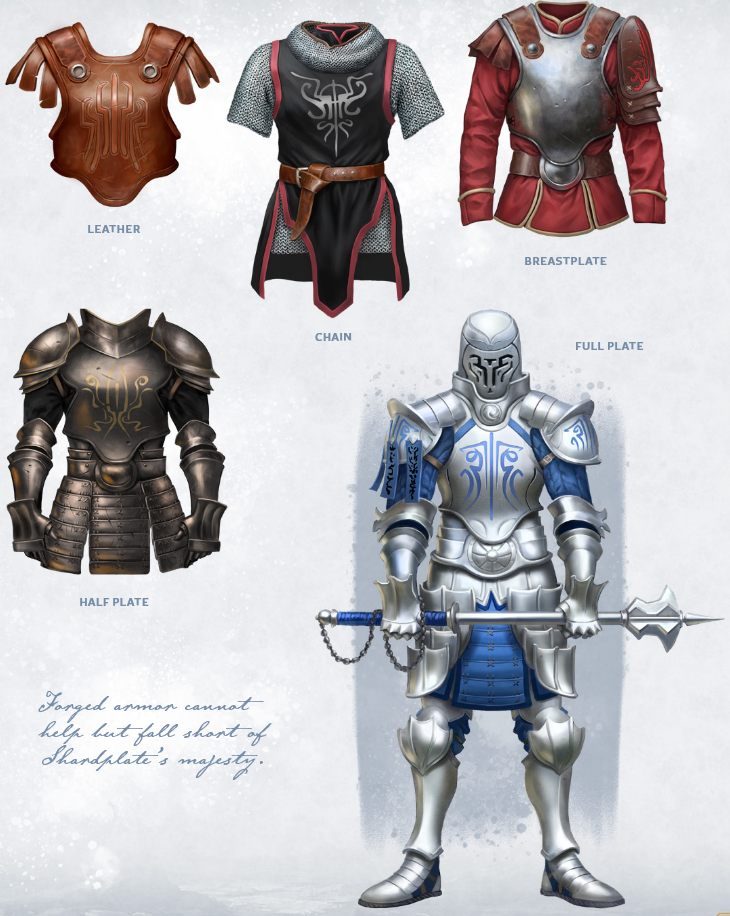
This section outlines the most common types of armor found on Roshar. You can only benefit from one type of armor at once, and you can't put on armor or take it off while in combat or in situations where it's hard to move. The Armor table includes the following columns:
Type. The general type of armor-but feel free to creatively describe your own, as long as it uses the same statistics.
Deflect Value. Reduce all incoming impact, keen, and energy damage by the deflect value of the armor you're wearing (see "Deflect" in part 1).
Traits. Special rules that apply to that armor (see the upcoming "Armor Traits" section).
Expert Traits. Special rules that apply only if you have an expertise in that armor. Some armors remove an undesirable trait if you have expertise, rather than adding a desirable trait.
Weight. The armor's weight.
Price. The armor's standard price.
Armor Traits
These rules apply to any armor with that trait listed in its entry on the Armor table.
Cumbersome [X]. To wear this armor easily, your Strength score must be equal to or greater than the number indicated in brackets. If your Strength is lower than that number, you're Slowed while wearing this armor and you gain a disadvantage on all tests that use your Speed attribute.
Dangerous. The GM can spend that you gain while wearing this armor to cause your uncontrolled motion to injure an ally with 5 feet of you, dealing 2d6 impact damage.
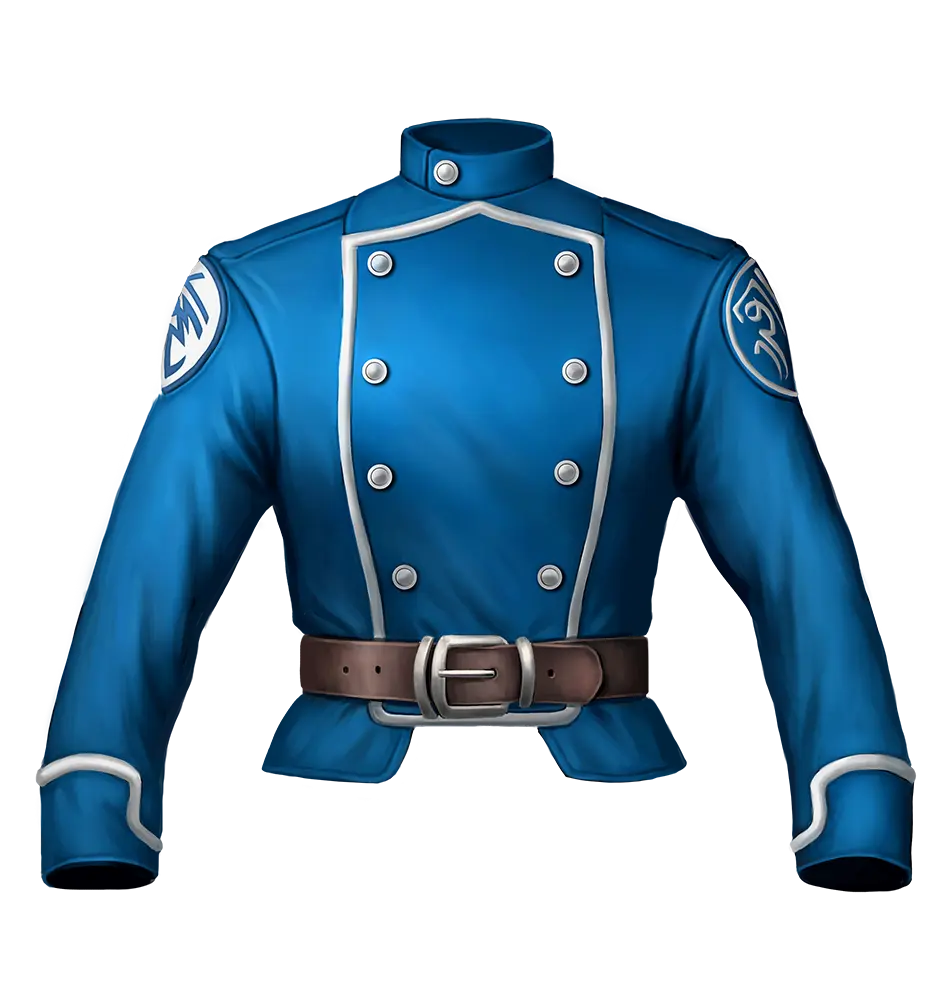
Presentable. This unobtrusive armor is presentable to wear in public in a non-military context. You don't suffer undue attention for wearing this armor or gain a disadvantage on tests for doing so in conversations.
Unique. This armor has unique rules detailed immediately following the word "Unique" in the Armor table (for example, "Unique: loses Cumbersome trait").
Armor Table
| Type | Deflect Value | Traits | Expert Traits | Weight | Price |
|---|---|---|---|---|---|
| Uniform | 0 | Presentable | -- | 5 lb. | 40 mk |
| Leather | 1 | -- | Presentable | 10 lb. | 60 mk |
| Chain | 2 | Cumbersome [3] | Unique: loses Cumbersome trait | 25 lb. | 80 mk |
| Breastplate | 2 | Cumbersome [3] | Presentable | 30 lb. | 120 mk |
| Half Plate | 3 | Cumbersome [4] | Unique: Cumbersome [3] instead of Cumbersome [4] | 40 lb. | 400 mk |
| Full Plate | 4 | Cumbersome [5] | -- | 55 lb. | 1,600 mk |
Equipment
This section presents everyday Rosharan tools and resources that are commonly applicable to your adventures. The Equipment table lists each item's name, weight, and price, then the text that follows describes each item's benefits.
Some items in this section have variable prices, as many variations on that item can be found across Roshar. The GM chooses how much an individual item costs within its range, and they might grant tangential benefits to the higher-priced varieties. For example, spending extra money on a blue wine, rather than a red, might lower your DC on a test made to influence a connoisseur.
Alcohol. Every culture of Roshar has its own intoxicating traditions, such as beers, mudbeers, ciders, honu, shiki, juices, and lagers.
In Vorin society, almost all forms of alcohol are referred to as "wine" regardless of their ingredients. Such wines are known by their distinct colors.
Anesthetic. Usually made from fathom bark or winterwort, you can apply a dose of anesthetic ointment to an injury after a short or long rest to reduce its recovery time by 1d4 days. Each injury can be treated with anesthetic only once per day.
Antiseptic (potent). Knobweed milk, fourleaf sap, and lister's oil can all be used to make a strong antiseptic. A dose can be applied to a character after a short rest to restore 2d6 health.
Antiseptic (weak). A dose of weak antiseptic, such as that made from larmic mucus, can be applied to a character after a short rest to restore 1d6 health.
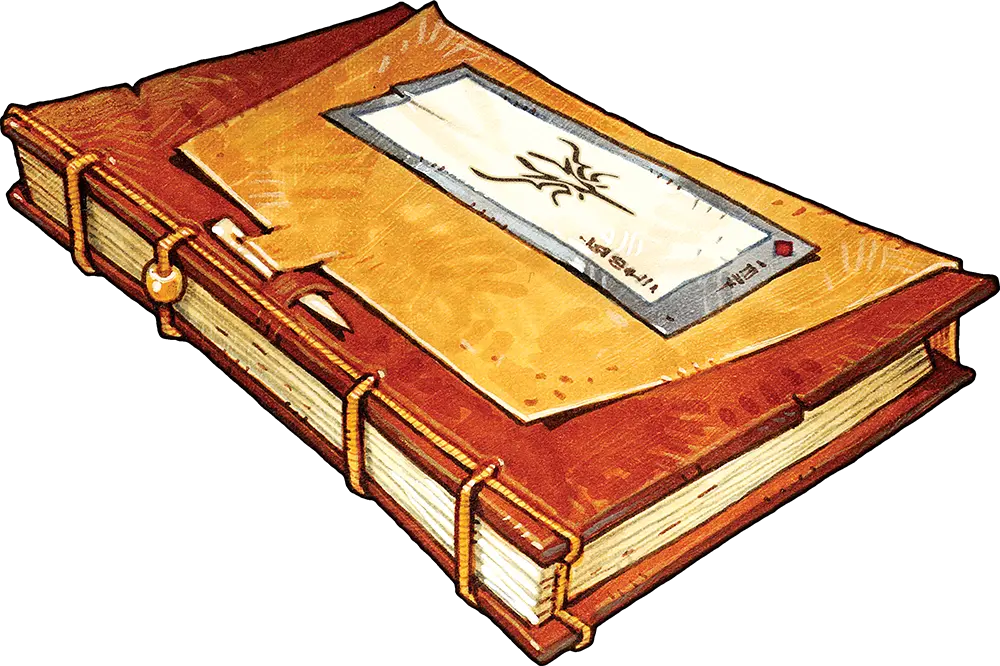
Book (reference). Each reference book contains information on a particular topic, such as a historical era, engineering, biology, or architecture. When you have time to reference a book while making a related test using your Intellect attribute, you're considered to have an expertise in the topic (see "Expertise Benefits" in part 1).
Candle. While lit, the candle sheds light in a 15-foot radius. It burns for up to 6 hours before becoming unusable.
Case (leather). A sealable, cylindrical case that can store up to ten pages of paper or parchment and protect them from the weather.
Chain (thick). This sturdy chain can be used in securing cargo, shackling prisoners, and other situations where strength is essential. This chain can be broken by succeeding on a DC 30 Athletics test or by dealing 15 damage to it.
Chain (thin). This thin chain is often used in jewelry and Soulcasters, usually made of precious metals in fine links. This chain can be broken by succeeding on a DC 20 Athletics test or by dealing 5 damage to it.
Clothing (common). Plain clothes are made of affordable materials and are generally undyed, helping you fit in among the commonfolk. While wearing these clothes, you gain an advantage on spiritual tests made to convince others you're from the lower class.
Clothing (fine). Fine clothes are made of silks or other high-quality materials, colored using expensive dyes, and often stitched with fine embroidery. Wearing fine clothes helps you to blend into high society without arousing suspicion. While wearing these clothes, you gain an advantage on spiritual tests made to convince others you're from the upper class.
Clothing (ragged). This clothing may have once been of fine or common make, but it's now barely holding together. While wearing these clothes, you gain an advantage on spiritual tests made to convince others you're destitute.
Crowbar. You can use a crowbar to gain an advantage on Athletics tests where the crowbar's leverage can be applied.
Ear Trumpet. Distant sounds heard through an ear trumpet can be perceived as though at half the distance. At the GM's discretion, more powerful ear trumpets may be available at higher prices.
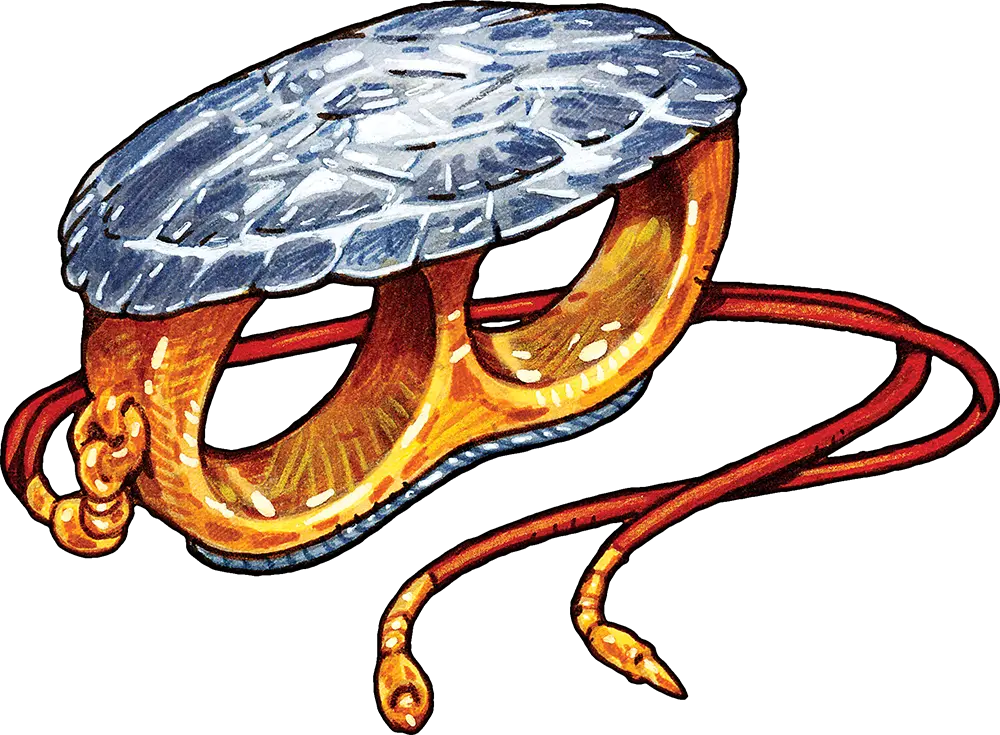
Flint and Steel. A flint and steel can be used as to light abundant fuel within reach. Starting a fire under more challenging circumstances can take 1 minute or more. Herdazians often wear a tool called a sparkflicker as jewelry or other ornamentation; they can use this like flint and steel by quickly running their crystalline fingernails along it.
Food (ration). Rations are foods created for extended travel, such as jerky and hard-baked lavis cakes. They generally lack flavor, but if kept dry, they remain edible indefinitely.
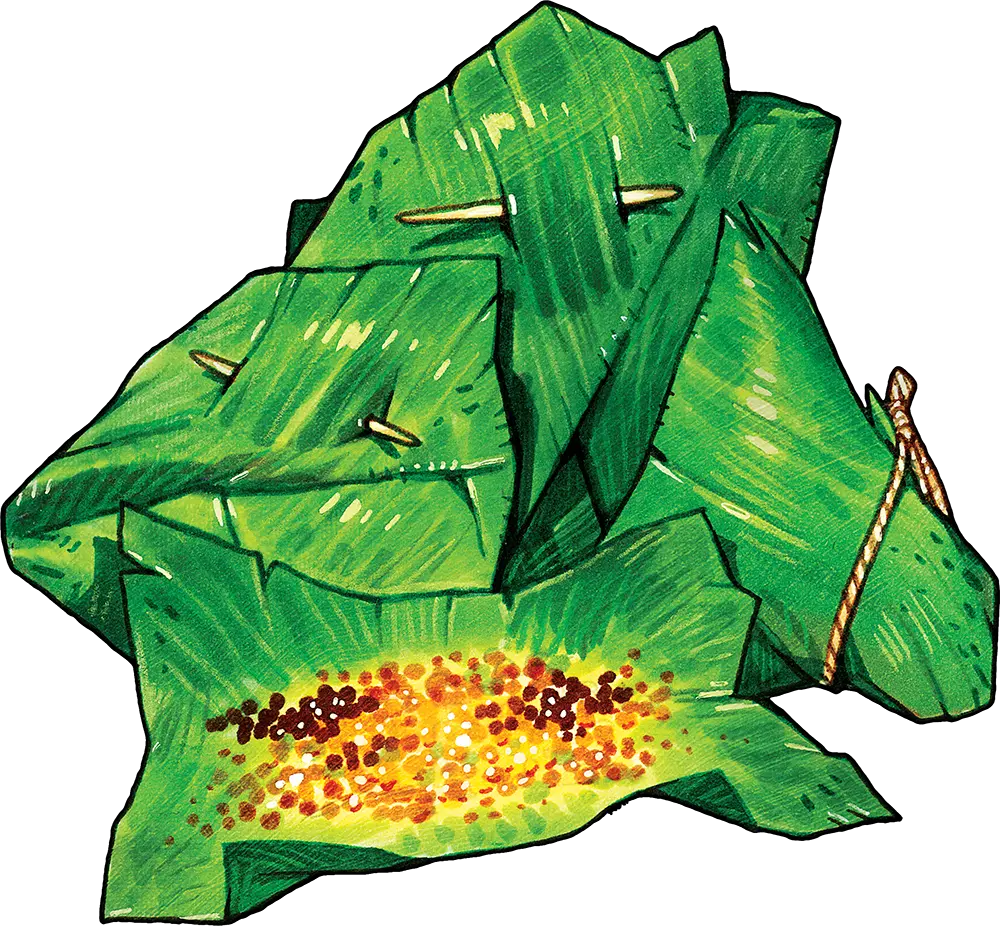
Food (street). Every culture of Roshar has its own street confections, ranging from loaves of bread to more specific cultural foods like Herdazian chouta.
Food (fine). Fine food can be found in high-class restaurants and on the tables of nobles' feasts.
Grappling Hook. A grappling hook is typically attached to the end of a rope to aid in scaling or descending from walls and cliffs. A securely anchored grappling hook grants an advantage on Agility and Athletics tests made to climb using its attached rope.
You can use an Interact action to attach the grappling hook to an anchor within reach without making a test. Alternatively, you can throw and attach it to a suitable anchor within 20 feet of you by succeeding on an Athletics or Agility test (DC set by the GM).
Lantern (oil). While lit, this lantern sheds light in a 30-foot radius. It burns for up to 6 hours per pint of oil.
Lantern (sphere). This lantern includes a locked cage, usually just under 1 foot in diameter, into which infused spheres can be placed to shed light. Depending on how full the lantern is, it sheds a different radius of light: 60 feet when entirely filled with spheres, 30 feet when half full, 15 feet when quarter-filled, and 5 feet when at least 1 mark or broam is within it. The lock can be opened with its included key or a successful DC 15 Thievery test.
Lock and Key. This sturdy lock can be opened with its included key or a successful DC 20 Thievery test. At the GM's discretion, locks that require higher DCs may be available at higher prices.
Lockpick. You can use a lockpick to gain an advantage on Thievery tests made to pick a lock. After this test is resolved, the GM can spend to cause the lockpick to break.
Magnifying Lens. You can use a magnifying lens to gain an advantage on skill tests made to appraise or inspect a small or highly detailed item.
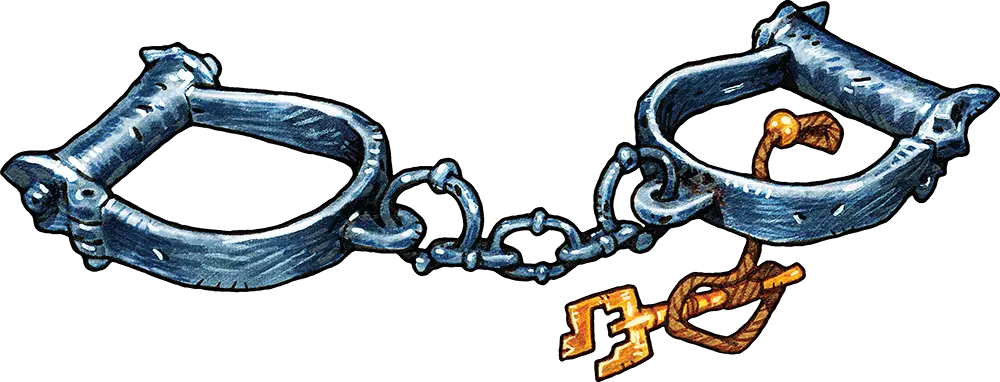
Manacles. These metal restraints, which come with a key, can bind the wrists or ankles of a Large or smaller character. They can be escaped with a successful DC 25 Agility test, broken by succeeding on a DC 25 Athletics test or by dealing 15 damage to them, or lockpicked by succeeding on a DC 20 Thievery test. At the GM's discretion, manacles that require higher DCs may be available at higher prices.
Musical Instrument. Every culture of Roshar has its preferred instruments and musical stylings. When playing an instrument, you can determine the quality of your performance by making a skill test using a related skill (such as Agility for a stringed instrument, Athletics for drums, or Discipline for an instrument with many keys). If you have an expertise in that instrument, you gain an advantage on the test.
Net (hunting). This net of thick rope can ensnare animals or enemies. While holding this net, you can use to make an Athletics test against the Physical defense of a Large or smaller character within 15 feet of you. On a hit, the character is Restrained and knocked Prone. That character or another within reach can use the Interact action to make a DC 15 Athletics test, freeing the trapped character on a success. If a character is Restrained by multiple nets, they must be freed from each separately.
Net (fishing). This net of fine mesh is used to ensnare fish. You can use this net to gain an advantage on physical tests related to fishing.
Oil. Oil generally comes in a 1-pint flask made of dried crem. Oil is flammable and can be used to fuel oil lanterns, to create dangerous terrain in a space, or as an improvised weapon (sling). When you hit or graze a target with this improvised weapon, you coat the target in oil in addition to the normal damage. Following the attack, regardless of the result, the crem flask breaks and any unused oil is lost.
Poison. Often manufactured using Roshar's deadly blackbane plant, poison comes in single-dose glass vials. As , you can pour it into food, liquid, or a container, or you can apply the poison to a melee weapon or a piece of ammunition you're holding. When you do, the GM may require you to make a Stealth test to avoid discovery. When a character ingests the poison or is hit by an attack using the poisoned weapon or ammunition, the poison is expended, and the character suffers the following effects:
Weak Poison. The target must succeed on a DC 12 Athletics test or take 1d6 vital damage.
Effectual Poison. The target must succeed on a DC 14 Athletics test or take 2d8 vital damage and be Stunned for 1 hour.
Potent Poison. The target must succeed on a DC 16 Athletics test or take 3d10 vital damage and be Stunned for 1 hour. While Stunned in this way, the target is Immobilized.
Pulley System. Most commonly used by engineers and artifabrians, this system includes four pulley wheels, 30 feet of rope, and a hook. When you have time to set up a pulley apparatus before lifting an object, you treat the object as being a quarter of its normal weight.
Rope. Rope is usually made of seasilk (or less commonly, lavis grain or rockbud fibers) and sold in 50-foot lengths that can be cut and tied to change its length as needed. It can be cut by dealing 2 damage to it, or it can be ripped apart with a successful DC 20 Athletics test.
Scale. Most commonly used by scholars, ardents, appraisers, and gem cutters, a scale can accurately determine the weight of an object (to a maximum of 2 pounds).
Spyglass. Distant objects viewed through a spyglass can be perceived as though at half the distance. At the GM's discretion, spyglasses that allow distant objects to appear even closer may be available at higher prices.
Surgical Supplies. This satchel contains enough bandages, salves, splints, and other medical supplies to be used 10 times. When you make a Medicine test to treat a wounded character (or to similarly use these medical supplies), you can expend one of these uses to gain an advantage on the test.
Treatment (medical). Rosharan surgeons treat ailments with a variety of treatments, generally made from bitterleaf or bloodivy. During a short rest, you can use a dose of such a treatment to cure a character of one of the following conditions, given that its source isn't a permanent injury: Disoriented, Exhausted (reduces the penalty by 1), or Stunned.
Tuning Fork. A tuning fork can transfer Stormlight from one sphere or gemstone to another. While using a tuning fork, you can use spheres to recharge fabrials, Shardplate, and half-shards as if the spheres were unencased gemstones.
Unencased Gem (infused). Unlike spheres with gemstones encased in glass, unencased gems leak Stormlight quickly, going dun within several days depending on their cut. This permeability allows unencased gems to recharge fabrials and Shardplate. Radiants can also breathe in Stormlight from unencased gems as if they were spheres, gaining the same benefit.
Equipment Table
| Name | Weight | Price | |
|---|---|---|---|
| Alcohol (1 serving) | 0.2 lb. | 0.5 – 50 mk | |
| Alcohol (bottle) | 2 – 4 lb. | 1 – 300 mk | |
| Anesthetic (5 doses) | 1.5 lb. | 75 mk | |
| Antiseptic (potent, 5 doses) | 1 lb. | 50 mk | |
| Antiseptic (weak, 5 doses) | 1 lb. | 25 mk | |
| Backpack* | 5 lb. | 8 mk | |
| Barrel* | 70 lb. | 15 mk | |
| Blanket* | 2 lb. | 2 mk | |
| Book (reference) | 1–5 lb. | 10–500 mk | |
| Bottle (crem)* | 3 lb. | 0.5 mk | |
| Bottle (glass)* | 2 lb. | 1 mk | |
| Bucket* | 2 lb. | 1 mk | |
| Candle | 0.2 lb. | 0.2 mk | |
| Case (leather) | 1 lb. | 4 mk | |
| Chain (thick, 10 feet) | 10 lb. | 20 mk | |
| Chain (thin, 1 foot) | 0.5 lb. | 20 mk | |
| Chest* | 25 lb. | 30 mk | |
| Clothing (common) | 3 lb. | 2 mk | |
| Clothing (fine) | 6 lb. | 50 – 200 mk | |
| Clothing (ragged) | 1.5 lb | 0.5 mk | |
| Crowbar | 3 lb. | 10 mk | |
| Ear trumpet | 1 lb. | 50 mk | |
| Flask or tankard* | 1 lb. | 1 mk | |
| Flint and steel | 1.5 lb. | 4 mk | |
| Food (ration, 1 day) | 0.5 lb. | 0.2 mk | |
| Food (street, day) | 1.5 lb. | 3 mk | |
| Food (fine, 1 day) | 0.5 lb. | 25 mk | |
| Grappling hook | 4 lb. | 10 mk | |
| Hammer (handheld)* | 3 lb. | 4 mk | |
| Ink ( 1-ounce bottle)* | 0.2 lb. | 40 mk | |
| Ink pen* | 0.1 lb. | 0.1 mk | |
| Jug or pitcher* | 4 lb. | 2 mk | |
| Ladder (10-foot)* | 20 lb. | 5 mk | |
| Lantern (oil) | 2 lb. | 20 mk | |
*This item is listed for roleplaying purposes and doesn't have specific statistics or rules.
| Name | Weight | Price | |
|---|---|---|---|
| Lantern (sphere) | 2 lb. | 20 mk | |
| Lock and key | 1 lb. | 50 mk | |
| Lockpick | 0.5 lb. | 5 mk | |
| Magnifying lens | 0.2 lb. | 400 mk | |
| Manacles | 6 lb. | 10 mk | |
| Mirror (handheld)* | 2 lb. | 25 mk | |
| Musical instrument | 0.5 - 20 lb. | 1 - 50 mk | |
| Net (hunting) | 5 lb. | 4 mk | |
| Net (fishing) | 15 lb. | 10 mk | |
| Oil ( flask) | 1 lb. | 1 mk | |
| Paper or parchment ( sheet)* | 0.1 lb. | 0.5 mk | |
| Perfume ( vial)* | 0.5 lb. | 20 mk | |
| Pick (mining)* | 10 lb. | 10 mk | |
| Poison (weak, dose) | 0.2 lb. | 20 mk | |
| Poison (effectual, dose) | 0.2 lb. | 50 mk | |
| Poison (potent, dose) | 0.2 lb. | 120 mk | |
| Pot (iron)* | 10 lb. | 8 mk | |
| Pouch* | 1 lb. | 1 mk | |
| Pulley system | 12 lb. | 100 mk | |
| Rope (50 feet) | 5 lb. | 30 mk | |
| Sack* | 0.5 lb. | 0.2 mk | |
| Scale | 3 lb. | 20 mk | |
| Shovel* | 5 lb. | 8 mk | |
| Soap* | 0.1 lb. | 1 mk | |
| Spyglass | 1 lb. | 500 mk | |
| Surgical supplies | 3 lb. | 20 mk | |
| Tent (two-person)* | 20 lb. | 10 mk | |
| Treatment (medical, dose) | 0.2 lb. | 10 mk | |
| Tuning fork | 0.5 lb. | 50 mk | |
| Unencased gem (infused) | 0.01 lb. | 2 mk | |
| Vial (glass)* | 0.2 lb. | 4 mk | |
| Waterskin* | 1 lb. (empty) | 1 mk | |
| Wax ( block)* | 0.5 lb. | 2 mk | |
| Whetstone* | 1 lb. | 0.2 mk | |


